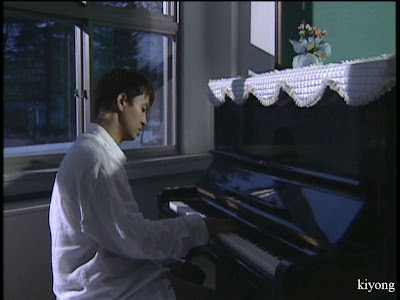
The Barefooted Youth
Home. SITE MENU TO VISIT EXHIBITSSCROLL FOR MOREOpen 1 3. Wednesdays and Saturdays. P. O. Box 1. 42. 20. N. Beckwith Malden, MO 6. Learn About MembershipPreserving The Past For The Future. Sign Up For Membership. Thanks To Our Members. Malden Established April 2. Welcome to the Malden Historical Museum. We are home to displays that not only reflect the history of Malden, but also such treasures as the Dennis Collection of Egyptian Antiquities with items that date back thousands of years. There is small donation request to tour the Malden Historical Museum and the public is welcome during normal visiting hours Wednesdays and Saturdays from 1 3. APPOINTMENTS FOR TOURSDonations of historical photographs of Malden and citizens of Malden is accepted after review by the board and a signed release is filled out by donor. Call us a 5. 73 2. E Mail us for information and tours. Compton Newberry Concert Entertainment At Its Best Thanks To Everyone For Their SupportCamp Covecrest. Covecrest is more than a retreat center and summer camp. Covecrest is a community of Catholics committed to transforming teens, transforming parishes. Youth can accomplish magnificent things for the Masters cause. But do we always recognize this Here are some striking examples that demonstrate Gods confidence. The Barefooted Youth Korean DramaEXHIBITSEnjoy a photographic tour of the museums different exhibit rooms. Everyone has deep in their heart the old town or community where they first went barefooted, got his first licking, traded the first pocket knife, grew up and finally went away thinking they here to big for that Burg. But thats where your old heart is. Will Rogers. Select Room Photographs To View Pages. Front Room. Indian Artifacts. Alumni Room. VIDEOMalden Historical Museum Offers Videos About The Museum, Southeast Missouri and A Special Video of Malden Filmed in 1. Explore Museum Videos of Maldens History The Malden Historical Museum was founded in 1. Mary Kochtitzky, who began collecting historical information and articles from area residents. The museum began in one room in the back of the Malden Library which was founded by her sister Elise Kochtitzky Byrd. Many antiques were donated to the museum for display and soon the meager space available was overwhelmed with a wide variety of items to display. A number of displays were set up at the museum for visitors to view and those displays were changed often by rotating them with items in storage. The museum continued to grow and was a favorite spot for visitors, especially school children who came individually and in groups. In 1. 98. 0 Floyd and Vera Brown donated their home at 2. North Beckwith Street to the museum. Following extensive renovation, the Malden Historical Museum opened its doors at its new home in 1. Thanks to the generosity and support of the citizens of Malden, the museum has been able to continue its purpose of preserving the history of the area. The museum receives no financial assistance from the city, state or national governments and is solely funded by memberships, memorials and donations. Over the years, the museum has seen visitors from 2. Missouri. A number of school classes, youth organizations and other groups have also toured the facility. Many special exhibits have been on display, including the Back to the 4. Easter Bonnets, History of Malden Schools, and Barn Again. Dont miss the Archival Room where the store of histories, oral tapes, maps and pictures is steadily increasing. All are being gathered into one room for easy access and preservation. The Museum is open to the public on Wednesdays and Saturdays from 1 3. You may also call Sue Bostic at 2. The Malden Historical Museum is staffed by Elizabeth Haskins and Sue Bostic, along with many volunteers and is operated under the auspices of a Board of Trustees. The Board of Trustees deeply appreciates your support and urges you to become a member. With a donation of 1. In Memorial and the Special Recognition plaques. Director David Black. President. Director Charles Dierks. Vice President. Director Sue Bostic. Secretary Treasurer. Director Mitch Green. Director Randy Burrow. Director Stokes Howell. Honorary. Director Roger East. Honorary. CONTACT USHISTORY OF MALDEN, MISSOURI The City of Malden, located five miles south of the north boundary line of Dunklin County, sits on a sand ridge extending north and south between the lowlands of New Madrid County on the east and the foothills of the Ozarks on the west. Malden forms an important link in the chain of progressive cities that extend from north to south through this part of Missouri, which is called the Bootheel. The location is ideal for a growing prosperous city because of the rich level farm lands surrounding it, the drainage ditches east and west, and the railways and highways passing through. Early settlers, long before Malden was thought of, engaged in hunting, trapping and farming. The first white man to locate in Dunklin County was Howard Moore in 1. Malden. M. Gibony built the first little clapboard grocery store in the county in 1. Farms along this ridge were few and far apart, but the people were friendly and hospitable. Wheat grew in the hills west of here and people went there to fill their straw bed ticks, which were used for mattresses. Bed ticks were also filled with feathers plucked from chickens, ducks and geese, placed on top of the straw filled one, and a very comfortable bed was made. Text To Speech Download Wav on this page. Rev. Riley Hatley lived and preached in a big log house. When weather permitted, the services were in the yard under the big locust trees. In cold or rainy weather the congregation gathered inside. People came from miles around to hear a gospel message once a month. Later, the circuit rider came through once a month and preached in the Old Union Church building. Pioneer settlers knew that better methods of transportation were necessary before the wheels of progress could bring better things to them. So a group of Dunklin County men joined with a group of New Madrid County men and formed an organization called the Blanton Plank Road Company. This company was incorporated under a special act of the Legislature in 1. New Madrid to the high land in Dunklin County. They were given a grant of 1. The road was barely completed when the Civil War interrupted business and nothing further was done to maintain it. In 1. Little River Valley and Arkansas Railroad was extended from New Madrid to a place we now call Malden then it was Brom Beckwiths cotton field. This was the western terminus of the road, and because of the nature of the country, the promoters decided to build a railroad town on this ridge to furnish supplies necessary for carrying out a great reclamation project. Different versions have been given concerning the way Malden got its name. The one given by Miss Mary Kochtitzky, daughter of the young civil engineer who had charge of laying out the new town, is the one accepted as the true one because it was told by her father, Otto Kochtitzky. One morning, after staying at a farm house all night, Major Clark said Otto, I know what to name the new town I dreamed it was named Malden. So it has been called Malden ever since. The first house was built by S. W. Spiller and Daniel Haynes and used for a store. Spiller was the first postmaster. Later, a committee headed by James Gregory, S. W. Spiller and Daniel Haynes, accompanied by 2. Kennett asking that they be incorporated and a police department established for their local government. The petition was granted on April 2. Malden was incorporated. Many business and professional men came to cast their lots with the fast growing community. It is said that in 1. Main Street. The Town of Malden became the City of Malden on March 1. The first brick buildings were the Levi Mercantile Company in 1. Japanese Buddhist and Shinto Slayer of Vanity Yamabushi Tengu, Karasu Tengu TENGUThe Slayer of Vanity Origins India China Japan. Tengu are mountain and forest goblins with both Shinto and Buddhist attributes. Their supernatural powers include shape shifting into human or animal forms, the ability to speak to humans without moving their mouth, the magic of moving instantly from place to place without using their wings, and the sorcery to appear uninvited in the dreams of the living. The patron of martial arts, the bird like Tengu is a skilled warrior and mischief maker, especially prone to playing tricks on arrogant and vainglorious Buddhist priests, and to punishing those who willfully misuse knowledge and authority to gain fame or position. In bygone days, they also inflicted their punishments on vain and arrogant samurai warriors. They dislike braggarts, and those who corrupt the Dharma Buddhist Law. The literal meaning of Tengu is Heaven and Dog. In Chinese mythology, there is a related creature named Tien Kou Tiangou, or celestial hound. The name is misleading, however, as the crow like Tengu looks nothing like a dog. One plausible theory is that the Chinese Tien Kou derived its name from a destructive meteor that hit China sometime in the 6th century BC. The tail of the falling body resembled that of a dog, hence the name and its initial association with destructive powers. Historical Notes. Tengu mythology was probably introduced to Japan in the 6th or 7th century AD, in conjunction with the arrival of Buddhism from Korea and China. These goblins thereafter appear in Japans ancient documents e. AD, and are closely associated with Mount Kurama in Japan near Kibune, the abode of the legendary white haired Sjb Sojobo, King of Tengu. In Myths and Legends of Japan 1. F. Hadland Davis, the Tengu are said to emanate from the primordial Japanese god Susano o. Supreme Snowboarding No Cd Patch. Tengu lore can be found not just in Buddhist circles, but also among Shinto, Budo, and Ninpo groups. As late as 1. 86. Edo Government was posting official notices to the Tengu, asking the goblins to temporarily vacate a certain mountain during a scheduled visit by the Shogun see Japan and China, by Captain Brinkley. Vissers report. L Karasu Tengu R Yamabushi Tengu. Lanterns on Festival Float, Dontsuku Festival, Inatori City Crow Tengu Riding Boar Karasu Tengu Color on Silk, Hanging Scroll, H 4. W 5. 4. 9 cm. Late Edo Period Painting by Kaih Ytoku, Sairin ji Temple, Kyoto. Photo from Faith and Syncretism Saich and Treasures of Tendai. Kyoto National Museum catalog, 2. In paintings and woodblock prints, the boar often appears as the steed of the tengu or of their king, Sjb. Sjb is closely linked to famed warrior Minamoto no Yoshitsune 1. Japans most revered samurai. In a well known legend, Yoshitsune lived among the tengu in his youth and received training in the arts of war from Sjb himself. Note The Buddhist martial deity Marishiten is also often shown riding atop a boar. Another possible interpretation of the above image relates to the following Zen story One day a hunter was in the mountains when he happened to see a snake killing a bird. Suddenly a boar appeared and began to devour the snake. The hunter thought he should kill the boar, but changed his mind because he did not want to be a link in such a chain, and cause his own death by the next predator to come along. On his way home he heard a voice call to him from the top of a tree. It was the voice of a tengu. It told him how lucky he was, for had he killed the boar, the tengu would have killed him. The man subsequently moved into a cave and never killed another animal. Sources A Field Guide to Demons, Fairies, Fallen Angels, and Other Subversive Spirits by Carol Mack, Dinah Mack and Animal Motifs in Asian Art An Illustrated Guide to Their Meanings and Aesthetics by Katherine M. Ball. Noh Mask. Yamabushi Tengupride fallen monkTengu Origins. Below text courtesy of JAANUSJapanese Architecture and Art Net Users Systemhttp www. Literally celestial dog. A bird like goblin frequently encountered in Japanese folk beliefs, literature and their pictorial depictions. The Japanese demons derive the name from the Chinese mountain god Tiangou, but also are related to the winged Buddhist deity Garuda Jp. Karura. Furthermore, tengu are seen as transformations Jp keshin of Shinto deities, yama no kami, mountain guardians often associated with tall trees. Tengu are of two physical types karasu tengu identified by a birds head and beak and konoha tengu distinguished by a human physique but with wings and a long nose also called yamabushi tengu. This type of tengu often carries a feather fan in one hand. Because of its long nose, tengu are associated with the Shinto deity Sarudahiko Sarutahiko who takes on the visage of a monkey, and tengu masks play a prominent role in some religious festivals. Early Japanese popular tales such as those in the KONJAKU MONOGATARI early 1. Buddhism, setting fires at temples or tricking priests. Priests who attain special powers through religious discipline, but use these powers for their own ends were thought to enter in the next life the transmigratory realm of tengudou. The earliest representations of tengu are in Kamakura period emaki, such as the Tengu zoushi emaki of 1. Nezu Museum, which criticize arrogant priests who end up becoming tengu. According to legend, as a boy the famous warrior Minamoto no Yoshitsune 1. Soujoubou near Kuramadera in the mountains north of Kyoto see photo below. Tengu frequently are shown in pictures concerning the life of Yoshitsune, including both the Hogen Heiji battle screens Metropolitan Museum and depictions of Hashi Benkei or Benkei at the Bridge theme. The Momoyama period daimyo Kobayakawa Takakage 1. Buzenbou on Mt. Hiko see photo below. The character of tengu gradually changed over the centuries. For instance, tengu were long thought to abduct children, but by the Edo period they often were enlisted to aid in the search for missing children. Similarly, tengu became temple guardians and sculpted images of them were placed on or around temple buildings. Tengu also are associated with yamabushi or mountain ascetics, whose form they often assumed. Tengu often are depicted wearing the yamabushis distinctive cap and robe. Illustration of tengu increased in popularity and variety during the Edo period, usually reflecting the more positive and even light hearted conception of the once ferocious demon. In particular, the long nose of the tengu carried both comic and sexual meaning in ukiyo e prints. JAANUS NOTES ON ORIGIN OF TENGU. Says F. Hadland Davis in his 1.